Three Things Thursday No. 17: Finding Rhythms

Hey there!
How’s it going?? A friend of mine recently said that her company had hit a point where they were switching from “holding it together” to “how do we adapt since this may go on for a while,” which I thought was sooo perfect. My family and I are in the exact same spot. For the last several weeks we’ve been in survival mode just navigating all the changes and situations, but now this is the “new normal,” and we’re starting to settle into looking for strategies, routines and rhythms that will help us in the long haul.
I have thoughts.
I wrote them all down but the email got to be, like, over 3,000 words long. I don’t want to overwhelm you so let’s just talk about the first thing this week and I’ll share more over the next couple of weeks.
Let’s start with family rhythms.
One of the things that I hear over and over again with people who are responding to the changes in their lives is that things feel very chaotic and… discombobulated? Unmoored? Adrift? Or possibly all of those things. For most people, the structure they had in their lives has been completely upended. Everything feels kind of… formless. It sucks, feeling like you’re scrambling every day but getting nowhere.
I think the answer is family rhythms. With rhythms you do the same types of things at the same times of day (or week) so that it just flows. You don’t have to think about it, your day seems to just fall into that same pattern (for good or bad) without effort.
This is a good thing and we can use it to our advantage.
Thing 1: The Default Pattern

Guess what? You already have a rhythm. You probably don’t realize it because it’s just normal to you, but it’s there. Yes, there might be some chaos (for some more than others) but looking past the chaos, what are the things that you or your family tends to do every day or every week at roughly the same time or in roughly the same order?
Do you always start your day on Facebook? Do you always roll into making dinner at 7? Do you avoid chores all week and then try to catch up in a mad dash on Sunday morning? Or maybe you can’t even deal with chores at all because you’re totally overwhelmed. Hey, no judgement here. It’s not like my laundry is done right now. ;-)
Whatever it is, whatever you tend to do every day or every week without really meaning to, that’s your default pattern. That’s your starting point.
Thing 2: What to Change?
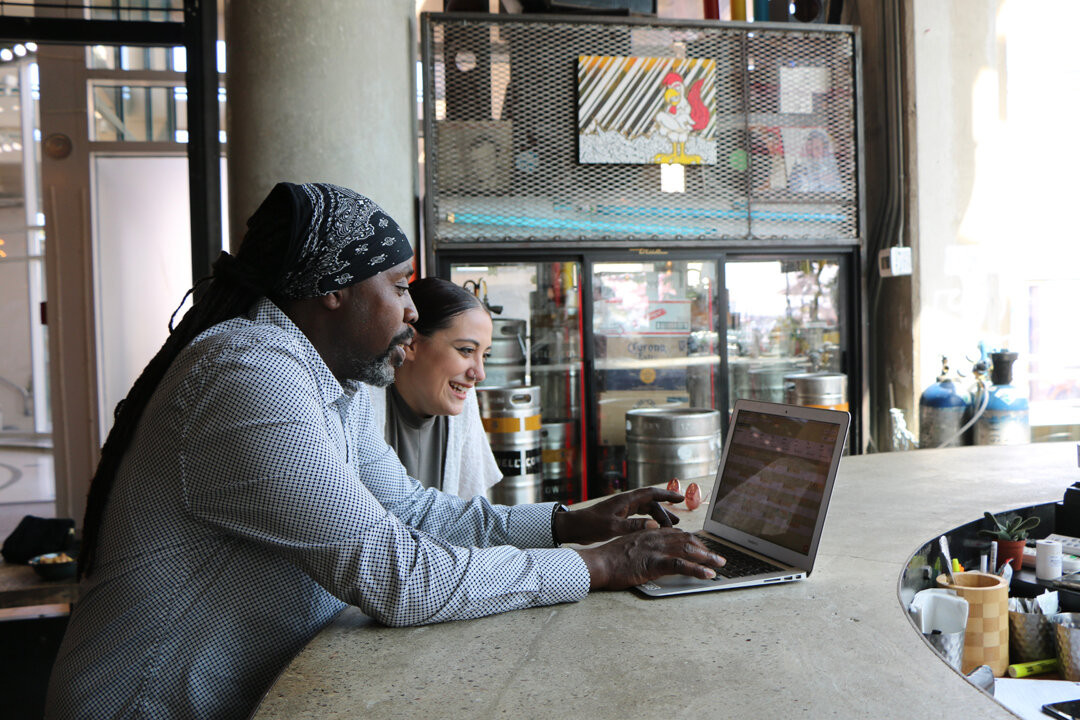
Now that you have a basic idea of your default family rhythm, ask yourself what you’d like to see be different in your daily or weekly pattern. Do you want to get to bed earlier or get up earlier? Start the day with a morning routine? Maybe change the way or time you interact with the news, or when you do your most focused work. Or maybe it’s just as simple as getting dressed before 2pm. (Not that I know anyone who has this problem. Ahem.)
If you have family and you all have different rhythms, stop to think about what their defaults seem to be. Think about places where your natural rhythms are out of sync and could be tweaked for more harmony.
If you have younger children, map their natural rhythms on to yours. Do the same for older children or adults in your home. They might even have some helpful suggestions for how to mesh different needs or what might be a change everyone can work on.
Brainstorm some possible ideas for things you might want to change. Talk about (or think about) how you are going to approach this project. Are you all going to work on one rhythm change as a family (everyone in bed by 9:30pm) or if you’re going to work individually. Maybe you are the only one committed to change and you are the only one who is going to make a change.
Then, we move on to:
Thing 3: Choose ONE

Time to choose one (yes, I said ONE) thing to change. Don’t cheat and say your “one thing” is cook perfect, healthy, delicious meals 4x a day starting now. Or that your “one thing” is to immediately begin a complicated health routine with 47 parts. No. Just one thing. Start dinner at 5pm. Move your mody for 5 minutes every day as soon as you wake up. Do 15 minutes of math with your kids every day after breakfast. Whatever it is.
If it’s something that has a natural anchor in your day (lessons after breakfast) then maybe some reminders near the breakfast table. Try to reduce the friction, too. What are you going to need for the math? Put it in one container on the breakfast table the night before. What do you need to move your body when you wake up? Put it on top of your nightstand or dresser in your bedroom.
If the new rhythm is time based, first see if there’s something you can attach it to. Is there something else that happens about that time or just before that time each day? (start dinner when the neighbor kids play basketball, or start dinner after my afternoon check-in meeting with my boss). If not, then an alarm—either physical or on your phone.
Do that for a week or two. Three if you need it. Basically just do that one thing until it feels normal and you don’t have to think about it anymore (or at least not much). It will feel agonizingly slow, but I promise it works. If you keep at it, over several months you will have changed a TON about your daily rhythm.
Don’t forget to reward yourself when you succeed! But don’t beat yourself up if you don’t. Next week we’ll talk about common reasons why your new habit just won’t stick (I’m looking at YOU daily art practice goal!!!)
Rinse and repeat.
That’s it!
This week it’s all making teeny tiny changes in order to get to a place of harmony and equilibrium in our chaotic lives.
Now you. What’s your favorite habit or rhythm that you use in your household? What change to your rhythm do you want to make this coming week? Leave a comment below and share!
You can also always find me on Facebook or Instagram!
Much love,

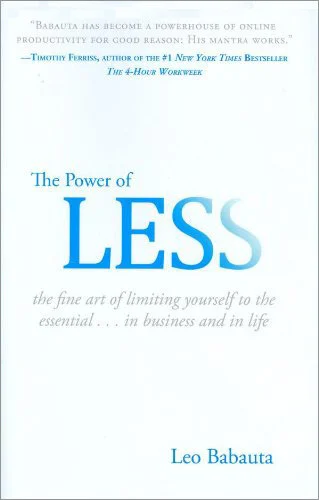
P.S. My favorite book about making small changes for long-term impact is The Power of Less by Leo Babauta. It’s a small book that covers minimalism in a variety of ways, but his story and example of the extreme changes he made in his life over time by committing to small changes is inspiring and helpful. It’s as much about changing habits as it is about getting rid of excess. I re-read it at least once a year. Available here on Amazon.
Many thanks to the generosity of photographers whose work is shared for free on Unsplash: Andrew Neel, Andrew Ridley, 7Shifts and Laura Rivera.